Coron Travel Guide: Wrecks, Lagoons & the Famous Viewpoint
Coron is Palawan's grittier, diver-focused sibling. WWII shipwrecks you can snorkel, lakes that look fake, and a vibe that's more local than El Nido. Here's the honest guide.
Last updated: September 2026
First, Understand Coron
Coron town sits on Busuanga Island, facing Coron Island across a strait. It's rougher around the edges than El Nido — dusty streets, working fishing boats, more locals going about their lives. That's not a bug, that's the appeal.
The star attractions are on Coron Island (the one with the lakes) and in the waters around it (full of WWII Japanese shipwrecks). Both are reached by the classic Coron island-hopping tour.
How long to stay: 3-4 days. One full island tour, one wreck-snorkeling day, one chill day. Most people come for 3 and wish they'd booked 4.
Coron Bay: What It Actually Is
Most people say "Coron" and mean the town, but the diving everyone comes for happens in Coron Bay — the stretch of water between Busuanga Island (where Coron town sits) and Coron Island to the south. It's part of the Calamian group, at the northern tip of Palawan province.
The bay is a wartime graveyard. In September 1944 Japanese supply ships moved here from Manila Bay to hide from American air raids. On 24 September 1944, aircraft from US Task Force 38 found them and sank around ten vessels in a single raid. They are still down there: Irako, Okikawa Maru, Akitsushima, Kogyo Maru, Olympia Maru, Taiei Maru, Kyokuzan Maru and Terukaze Maru, plus the Lusong and East Tangat gunboats.
Depths run from roughly 10m to 40m. The two gunboats and the Skeleton Wreck sit shallow enough to see from the surface with a mask — which is why non-divers can still "do the wrecks". The deeper ones (Irako, Okikawa Maru) are why certified divers fly here.
Coron Island itself is ancestral Tagbanua land. The Tagbanua community manages access and collects the fees, which is why you pay a permit fee and are asked to stay inside the marked areas. Kayangan Lake is a sacred site for them — expect signs asking for quiet, and no swimming in certain zones.
Practical: the wreck sites are 20-60 minutes by outrigger boat from Coron town, and boats leave early because the bay is calmest in the morning and chops up after lunch.
The Must-Do Tour
There's essentially one main tour everyone does, plus a few variations. The Ultimate Tour (also called the Classic or Tour A) hits all the icons:
Kayangan Lake
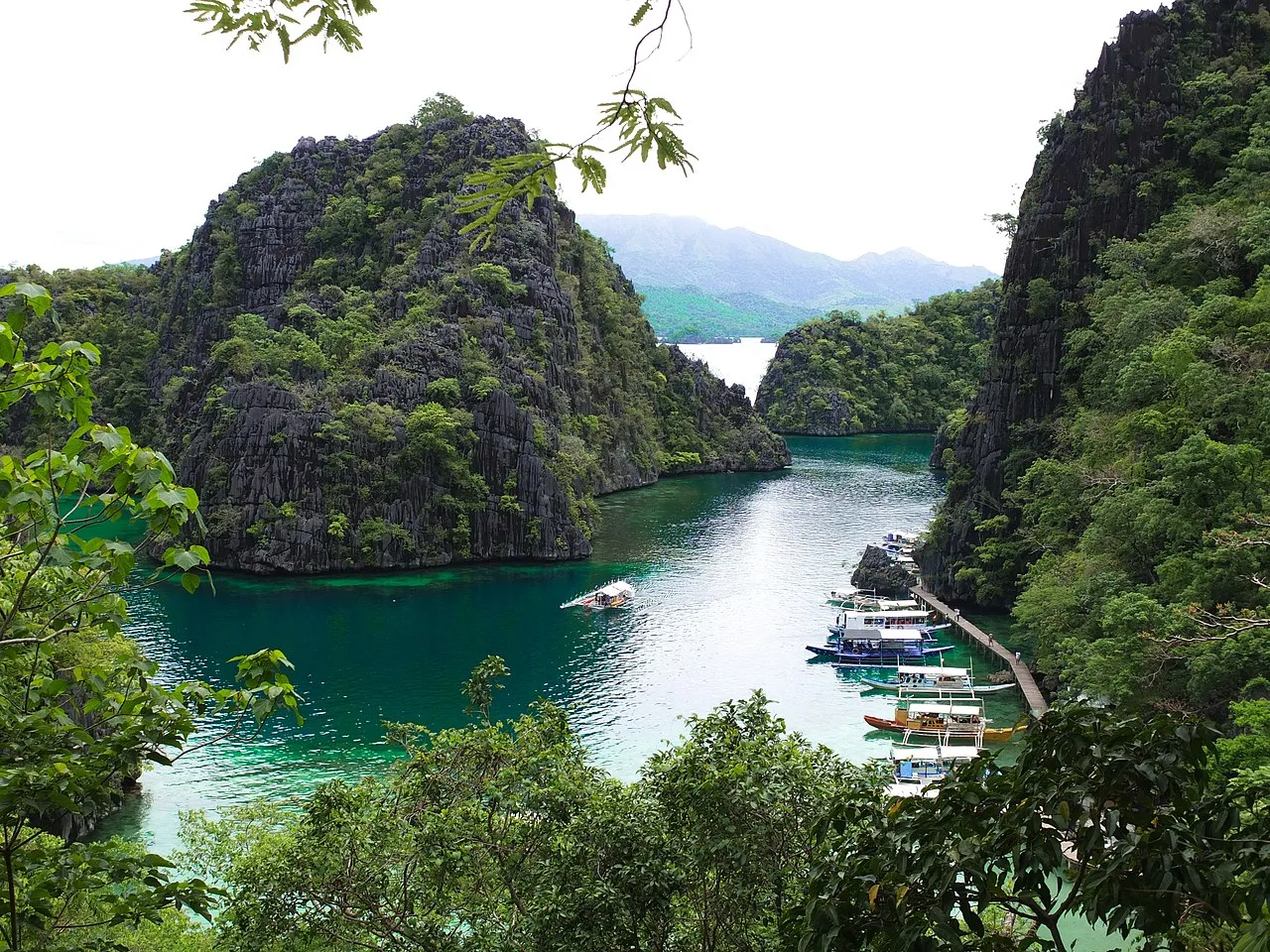
The famous viewpoint shotClimb 300 steps to the viewpoint, get THE Coron photo — emerald lake framed by limestone cliffs. Then descend into the lake itself. It's a mix of fresh and saltwater, so you float effortlessly. Swim out to the far side for the best water. Part of the tour.
Twin Lagoon
Two worlds in one coveA lagoon split by a limestone wall with a gap you swim through. The water temperature changes as you cross — warm on one side, cool on the other. The entrance is the fun part. Part of the tour.
Barracuda Lake
Thermocline weirdnessDramatic cliffs, deep water, and a thermocline that makes the water visibly shimmer. Great for a jump off the wooden platform. Less crowded than Kayangan. Part of the tour.
CYC Beach / Skeleton Wreck
Lunch stop + shallow wreckLunch on the beach, then a snorkel over the Skeleton Wreck — a WWII wreck in shallow water you can see from the surface. The easy intro to Coron's wreck diving. Part of the tour.
Tour cost: ₱1,400–1,700 ($25–30), plus ₱200 municipal environmental fee and ₱300 Kayangan Lake site fee including lunch, mask, and snorkel. Departs 9am, back 4pm.
Wreck Diving: The Real Reason Divers Come
Coron Bay holds the wrecks of Japanese supply ships sunk by US planes in September 1944. Some of the best wreck diving in the world, and it's shallow enough for beginners.
If you're certified: do at least one wreck dive. The Irako (with intact engine room) and Okikawa Maru (the biggest) are the classics. Dive shops run daily trips: ₱3,000–5,000 for two dives, gear included.
Not certified? Take a Discover Scuba course (1 day, $50-70) — they'll take you on a shallow wreck. Or skip it: the snorkel tours cover the shallow wrecks fine.
Beyond the Tour: Maquinit Hot Springs
Coron's hidden gem. Natural saltwater hot springs, 15 minutes outside town by tricycle ($3). Four pools at different temperatures, set in mangroves, open until 8pm. The perfect wind-down after a day on the boat. Entry: $5. Do it — it's the best $5 you'll spend in Coron.
Real Costs in Coron (2026)
| Item | Price |
|---|---|
| Hostel dorm bed | $6 - $10 |
| Island tour (Ultimate) | ₱1,400 - ₱1,700 |
| Wreck dive (2 dives) | ₱3,000 - ₱5,000 |
| Hot springs entry | $5 |
| Municipal environmental fee (once per stay) | ₱200 |
| Kayangan Lake site fee (Tagbanua community) | ₱300 |
| Local meal | $2 - $4 |
| Daily total (backpacker) | $30 - $45 |
Want to see how Coron fits into a whole trip? Run your days through the Philippines trip cost calculator.
What each tour and gate fee actually costs
Coron's operators each publish their own rate card, so here are the current figures rather than a guessed range:
- Ultimate Tour — Kayangan Lake, Twin Lagoon, Barracuda Lake, Skeleton Wreck: ₱1,500 per person (joiner)
- Super Ultimate — both lakes in one day: ₱1,700
- Island Escapade — Malcapuya, Banana, Ditaytayan: ₱1,600
- Shared bangka on the standard route, food and entrance fees included: ₱1,400
- Private bangka charter, 2–4 people, boat only: from ₱3,500
Gate fees you pay on top of the tour
| Fee | Amount |
|---|---|
| Municipal environmental fee (once per stay, not per site) | ₱200 foreign visitor · ₱150 Filipino |
| Kayangan Lake (collected by the Tagbanua community) | ₱300 |
| Siete Pecados marine park | ₱100 |
| Malcapuya · Bulog Dos · Banana (each) | ₱250 |
| Calauit Safari Park | ₱400 |
| Maquinit Hot Springs | ₱300 |
| Mask & snorkel · fins · aqua shoes (each, per day) | ₱150 |
| Kayak rental | ₱1,500 per day |
Checked September 2026 — tour prices are operator rate cards, gate fees are set by the municipality and the Tagbanua community, and both are collected in cash.
Some sources still quote ₱200 for Maquinit and ₱150 for Calauit — carry small notes and expect the higher figure at the gate.
Getting around once you land
- Busuanga (USU) airport → Coron town shared van: ₱250 per seat, or ₱1,500 for the whole van
- Tricycle in town: ₱15–20 shared on a fixed route, ₱60–150 for a private ride
- Motorbike rental: ₱300–1,000 per day depending on the bike
- Dorm bed in Coron town: ₱350–600
Getting to Coron
From El Nido: 4-hour ferry, ₱2,600–3,080 ($42-49). Leaves 6am daily (Montenegro or Atienza lines). Rough seas in wet season — motion sickness pills are not optional.
From Manila: Direct flights to Busuanga Airport (USU) on Cebu Pacific and AirAsia, $30-55. Airport to Coron town: 45-minute van, $5.
From Puerto Princesa: 8-hour van, $15, or the 5-hour boat. Most people don't do this route — fly or take the ferry instead.
Where to Stay
Most hostels are on the seafront strip near the port. All prices are dorms.
Budget: Dayon Hostel ($6, quiet, clean), Hop Hostel ($7, rooftop bar, social), The Hub ($8, best WiFi in town, work-friendly).
Splurge worth it: Coron Ecolodge ($15, beachside, sunset views) — treat yourself for 2 nights.
Book 2-3 days ahead in dry season. Coron is smaller than El Nido, so options fill up faster.
Sample Itineraries: 2 or 3 Days in Coron
Coron is small enough that a few days covers it. Here's the honest way to spend them:
| Day | 2-day plan | 3-day plan |
|---|---|---|
| Day 1 | Ultimate Island Tour (Kayangan, Twin Lagoon, Barracuda, Skeleton Wreck) — ₱1,400–1,700 | Ultimate Island Tour — ₱1,400–1,700 |
| Day 2 | Wreck dive or snorkel trip + Maquinit hot springs at sunset — $40-60 | Wreck diving (2 dives) or Discover Scuba — $40-70 |
| Day 3 | — | Sleep in, Maquinit hot springs, town food crawl, sunset at the port — $15 |
El Nido vs Coron: Which Should You Pick?
If you're planning a Palawan trip, this is the question everyone asks. Here's the honest comparison:
| Factor | El Nido | Coron |
|---|---|---|
| Beaches & lagoons | More dramatic, more famous | Fewer, but emptier |
| Underwater | Good snorkeling, little wreck life | WWII wrecks — best in the country |
| Crowds | Peak season is packed | Noticeably quieter |
| Vibe | Touristy but beautiful | Grittier, more local |
| Cost | Slightly higher | A touch cheaper |
The honest answer: most travelers do both — the ferry is only 4 hours. If you must pick one: divers pick Coron, scenery-chasers pick El Nido.
Who Should Skip Coron
Not everyone loves Coron, and that's fine. Skip it if:
- You want pristine white-sand beaches — Coron's beaches are good but not Boracay-level. El Nido or Boracay beat it there.
- You're not into boats, diving, or hiking steps — the whole day is boat + stairs + water. If that's not your thing, you'll be bored by day 2.
- You have seasickness issues — the El Nido→Coron ferry and even island tours get rough. Bring pills or pick a calmer destination.
- You're on a strict 7-day trip — adding Coron means cutting time elsewhere. With one week, do El Nido + Puerto Princesa instead.
What Nobody Tells You
Planning a bigger trip?
Coron is part of the Palawan trail — see the full Palawan guide, or combine it with El Nido on the ferry route.
Frequently Asked Questions About Coron
Where is Coron Bay in the Philippines?
Coron Bay sits in the Calamian Islands, at the northern tip of Palawan province. Coron town is on Busuanga Island on the north side of the bay, and Coron Island — the one with Kayangan Lake — is on the south side.
Getting there: fly Manila to Busuanga Airport (USU), about an hour, $30-55, then a 45-minute van to town ($5). From El Nido it's a 4-hour ferry (₱2,600–3,080 / $42-49).
How many shipwrecks are in Coron Bay?
Around ten Japanese ships, sunk by US Task Force 38 aircraft on 24 September 1944. Six or seven are regularly dived, and the Lusong Gunboat and Skeleton Wreck are shallow enough to snorkel. Depths run from about 10m to 40m.
Is Coron worth it for backpackers?
Yes — if you dive or snorkel. Budget $30-45 a day: hostel dorm $6-10, the Ultimate island tour ₱1,400–1,700 ($25–30), a two-dive wreck trip ₱3,000–5,000. Coron is cheaper and noticeably quieter than El Nido, but there's much less to do if you never get in the water. See the transport guide for the ferry and flight legs.
How many days do you need in Coron?
3-4 days. One day on the Ultimate island tour (Kayangan, Twin Lagoon, Barracuda Lake, Skeleton Wreck), one day wreck diving or snorkeling, and one slower day for Maquinit hot springs and town. Two days is doable if you drop the second water day.
Coron or El Nido — which should you pick?
Divers and wreck fans pick Coron; scenery and lagoon chasers pick El Nido. Most people do both — the ferry between them takes 4 hours. Full comparison further down this page.
When is the best time to visit Coron?
December to May is the dry season: calmer crossings, better visibility, more crowds. June to October is the wet season — cheaper hostels and emptier boats, but the Sulu Sea ferry gets rough and can be cancelled. Dives still run in the wet season; snorkel visibility is the thing that suffers.
Related Guides
Plan more of your trip: Philippines Backpacking Guide · Backpacking Itineraries · Budget Database · El Nido GuidePuerto Princesa Guide