Banaue: 2,000-Year-Old Terraces & Mountain Soul
Forget the beaches. This is the Philippines at its most ancient — hand-carved rice terraces stretching to the sky, cold mountain air, and the quiet hospitality of the Ifugao people.
Last updated: September 2026
Why Banaue Hits Different
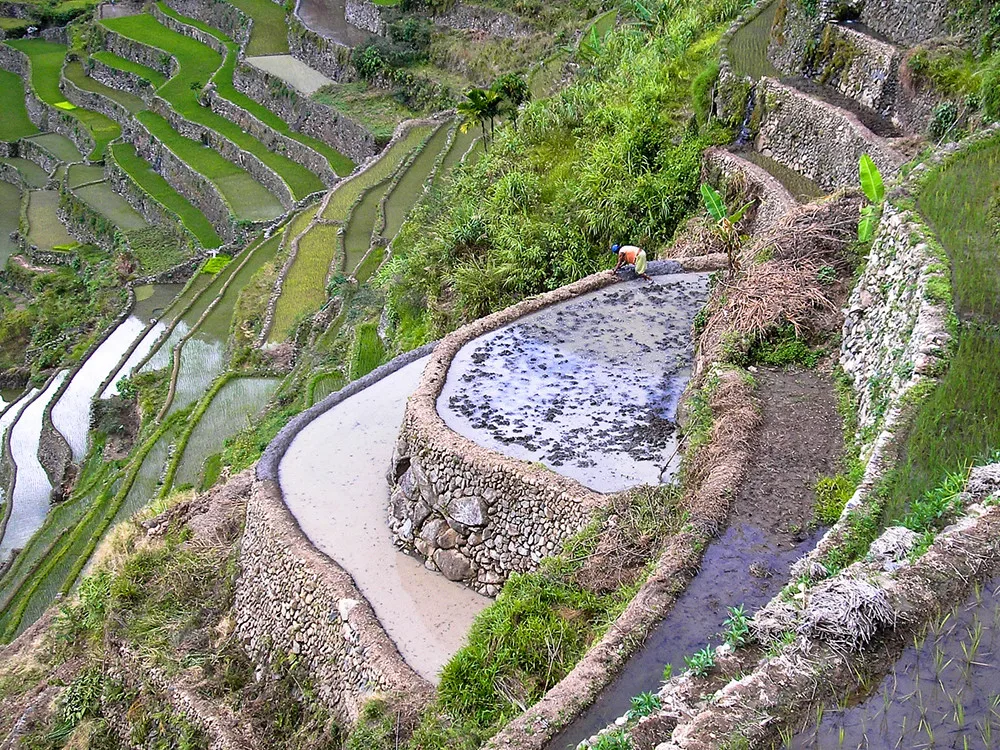
Banaue is the anti-beach Philippines. No palm trees, no turquoise water, no island-hopping tours. What you get instead: the crisp mountain air at 1,200m altitude, the sight of 2,000-year-old rice terraces disappearing into morning mist, and the kind of silence that only exists at the edge of a valley carved by hand over two millennia.
The town of Banaue itself is a one-road strip along a ridge — a few guesthouses, a couple of bakeries, and a morning market where Ifugao elders in traditional woven clothing sell vegetables you've never seen before. It's not Instagram-pretty. It's real.
Batad, 40 minutes away by tricycle plus a 30-minute hike, is where the magic actually is. An amphitheater of rice terraces wrapping around an entire valley. No roads reach it — you walk in, you walk out. That's the point.
Banaue Rice Terraces: What You're Actually Looking At
The Banaue rice terraces are carved into the mountains of Ifugao province in the Cordillera, around 1,200m above sea level and 9-10 hours by night bus from Manila. They're fed by an irrigation system that channels water down from the forest ridgelines above — which is why they still work as farms rather than a photo backdrop.
The UNESCO question. The terraces are a World Heritage Site, but not the ones you see from the Banaue viewpoints. The 1995 listing, "Rice Terraces of the Philippine Cordilleras", covers five clusters: Batad and Bangaan (both in Banaue municipality), Mayoyao, Hungduan and Nagacadan. The terraces visible from Banaue town are nationally protected, and they're the ones printed on the 1,000-peso note.
How old are they? UNESCO lists them as believed to be around 2,000 years old, and that's the number you'll hear locally. Recent archaeological work (the Ifugao Archaeological Project) dates most terrace systems to roughly 400 years ago, around the time of Spanish contact. Nobody has settled it, and the engineering is remarkable either way.
What grows here: tinawon, the heirloom red rice grown on these paddies and harvested once a year. Order it with a meal — you're eating the reason the terraces exist.
The Terraces Worth Trekking To
Batad Rice Terraces
Batad village · 40 min tricycle + 30 min hike from Banaue town
This is the one. Unlike the Banaue viewpoint terraces (visible from the highway), Batad's terraces form a natural amphitheater — concentric rings of rice paddies cascading down an entire valley. The view from the ridge at sunrise, with clouds pooling below you, is the single best thing you'll see in the Cordilleras.
Stay overnight in a native Ifugao hut ($3-5). No hot water, no WiFi. Just the sound of frogs in the paddies and the smell of woodsmoke from the village below. The hike from the drop-off point to the village takes about 30 minutes — steep downhill going in, steep uphill coming out. Pack light.
Tricycle from Banaue: $8 (split 4 ways) | Hut stay: $3-5 | Guide: $10/day
Tappiya Falls
Below Batad village · 45 min hike from Batad
A powerful 70-meter waterfall at the bottom of the Batad valley. The hike down takes you through the terraces themselves — you'll be walking along narrow paddy walls with 2-foot-wide paths. The pool at the base is deep enough to swim, and the water is freezing. Worth every step. The hike back up is the real workout — bring water and take breaks.
Environmental fee: $1 | Part of Batad guide fee
Bangaan Village
Bangaan · 30 min tricycle from Banaue + 20 min hike
A smaller, less-visited cluster of traditional Ifugao houses nestled in a valley of terraces. Fewer tourists than Batad — you might be the only foreigner there. The village has a few homestays run by families who've lived here for generations. If Batad feels too scripted, Bangaan is the raw alternative.
Tricycle: $5 | Homestay: $4-6 including dinner
Hapao Rice Terraces
Hungduan municipality · 1h from Banaue town
Longer, flatter terraces built along a river valley. Less dramatic than Batad, but the hike is easier and the hot springs at the end are a reward worth chasing. The terraces here are still actively farmed with traditional irrigation — you might see farmers planting or harvesting depending on the season.
Jeepney: $2 | Hot spring entry: $1
Banaue Viewpoint
Banaue town proper · 5 min walk from the highway
The postcard shot. Two viewpoints (Viewpoint 1 and 2) overlook the main Banaue terraces that spread across the mountainside. It's a quick stop — 15 minutes is enough. Go at sunrise for the best light, or late afternoon when the terraces turn gold. The viewpoint café sells strong Ifugao coffee for $0.50.
Viewpoint fee: $0.50 | Coffee: $0.50
How to Get There
Overnight bus from Manila (best option)
Ohayami Trans and Coda Lines run direct night buses from Manila (Sampaloc) to Banaue. 9-10 hours, $10-15. Depart 9-10 PM, arrive 6-7 AM. Buses are comfortable — reclining seats, blankets provided. Book 1-2 days ahead at the terminal. The winding mountain roads in the last 2 hours can be rough — take motion sickness pills if you're prone.
Fly to Cauayan (CYZ) + van
Faster but pricier: fly Manila to Cauayan Airport ($30-60, 1 hour on Cebu Pacific), then take a 2-hour shared van to Banaue ($8-10). Vans wait at the airport. Total journey 3-4 hours vs 10 hours by bus. Worth it if you're short on time.
Getting around Banaue
Tricycles are the only transport. To Batad junction: $8/tricycle (split with other backpackers). To Hapao: $15-20 round trip. Within town: $1-2. No motorbike rentals in Banaue — the terrain is too steep and the roads to the trailheads are unpaved.
Where to Stay
All prices for basic rooms. Expect cold showers, thin walls, and the best mountain views of your life.
Banaue town: Banaue Homestay ($4 dorm, family-run, rooftop terrace with terrace views), Uyami's Green View Lodge ($6 private, hot shower — a luxury here), People's Lodge ($5, central location, reliable WiFi).
Batad village: Simon's Viewpoint Inn ($3 dorm, the best sunrise spot in Batad — wake up and the terraces are right there), Hillside Inn ($4 private hut, run by a local family, home-cooked dinners included for $2 extra), Ramon's Homestay ($5, newer, slightly more comfortable).
Tip: Batad has no ATMs, no card payments, and patchy signal. Bring enough cash for your entire stay. The last ATM is in Banaue town.
Find Banaue stays on Booking.comWhat to Eat in Banaue
Ifugao food is mountain food — hearty, simple, and unlike anything you'll eat on the islands. Ingredients come from the terraces and surrounding forests.
Pinikpikan — The most famous (and controversial) Cordillera dish. Chicken lightly beaten before cooking (traditional method to bring blood to the surface for flavor), then boiled with smoked pork (etag) and mountain vegetables. The result is a smoky, rich broth unlike any chicken soup you've had. Not every restaurant serves it — ask at your guesthouse. $2-3.
Etag — Salted and sun-dried smoked pork, aged for weeks. Think of it as the Ifugao version of prosciutto, but smokier and saltier. Served in strips with rice or chopped into pinikpikan. Buy a piece at the Banaue market to snack on during hikes. $1-2 per serving.
Tinawon Rice — The heirloom rice variety grown on the terraces themselves. Red, aromatic, and nuttier than white rice. It's only harvested once a year and considered the best rice in the Philippines. Every guesthouse serves it — ask specifically for tinawon, not regular rice. $0.50 with a meal.
Ifugao Coffee — Strong, dark, grown on the mountain slopes around Banaue. Served black in tiny cups. The café at Banaue Viewpoint brews the best cup, but every guesthouse makes a decent one. Buy a bag of beans ($3) at the market to take home.
Sample Itineraries: 2 or 3 Days in Banaue
Banaue rewards slow travel — here's how to structure your mountain time:
| Day | 2-day plan | 3-day plan |
|---|---|---|
| Day 1 | Night bus arrives 6-7am, rest, Banaue Viewpoint, town market | Night bus arrives, rest, Banaue Viewpoint, town walk |
| Day 2 | Tricycle to Batad, hike in, terraces sunset, stay in a hut ($3-5) | Tricycle to Batad, hike in, afternoon terraces, hut stay |
| Day 3 | — | Sunrise, Tappiya Falls hike (45 min down), hike out, night bus home |
Banaue Survival Tips
Frequently Asked Questions About Banaue
Where is Banaue in the Philippines?
Banaue is a town in Ifugao province, in the Cordillera mountains of northern Luzon — roughly 250km north of Manila. It's a 9-10 hour overnight bus from Manila ($10-15), or a 1-hour flight to Cauayan plus a 2-hour van ($38-70 total).
Are the Banaue Rice Terraces a UNESCO World Heritage Site?
Partly. The 1995 World Heritage listing covers five terrace clusters, and two of them — Batad and Bangaan — are inside Banaue municipality. The terraces you photograph from the Banaue town viewpoints are nationally protected, not part of the UNESCO inscription. Practically: Batad is the one to prioritise.
How much does a Banaue trip cost?
$50-70 for two days, all in: night bus $25 round trip, guesthouse or Ifugao hut $3-8 a night, tricycle to the Batad junction $8 (split between passengers), local guide $10-15 a day (also splittable), food $5-8 a day. It's the cheapest region in the Philippines — getting here is the main expense.
How many days do you need in Banaue?
Two days covers Banaue viewpoint and Batad. Three days lets you add Tappiya Falls and either Bangaan or the Hapao terraces without rushing. Anything less than two days isn't worth the bus ride.
Do you need a guide to trek to Batad?
Not legally, but you should hire one for your first trek. Some trails cross private rice paddies, the paths are narrower than they look, and a guide is the difference between "a steep walk" and "a steep walk on someone's farm". They're $10-15 a day and you can split the cost with other travellers at your guesthouse.
When is the best time to visit Banaue?
December to May is the dry season — the clearest views and the safest trails. June to October is wet and misty, and August to September sits in the peak of the typhoon season (the mountain roads are the first thing to close). For colour: expect green paddies early in the rice cycle and gold terraces just before the June-July harvest.
Related Guides
Plan more of your trip: Philippines Backpacking Guide · Backpacking Itineraries · Philippines Trip Cost · Budget DatabaseItineraries